-
The Art of Fine Dining Interiors
The ambiance of a dining room is the very first impression we absorb; it profoundly shapes the overall culinary experience before a single dish is even served.
The Art of Fine Dining InteriorsThe ambiance of a dining room is the very first impression we absorb; it profoundly shapes the overall culinary experience before a single dish is even served.
The Art of Fine Dining InteriorsThe ambiance of a dining room is the very first impression we absorb; it profoundly shapes the overall culinary experience before a single dish is even served.
The Art of Fine Dining InteriorsThe ambiance of a dining room is the very first impression we absorb; it profoundly shapes the overall culinary experience before a single dish is even served.
The Art of Fine Dining InteriorsThe ambiance of a dining room is the very first impression we absorb; it profoundly shapes the overall culinary experience before a single dish is even served.
The Art of Fine Dining InteriorsThe ambiance of a dining room is the very first impression we absorb; it profoundly shapes the overall culinary experience before a single dish is even served.
The Art of Fine Dining InteriorsThe ambiance of a dining room is the very first impression we absorb; it profoundly shapes the overall culinary experience before a single dish is even served.
The Art of Fine Dining InteriorsThe ambiance of a dining room is the very first impression we absorb; it profoundly shapes the overall culinary experience before a single dish is even served.
The Art of Fine Dining InteriorsThe ambiance of a dining room is the very first impression we absorb; it profoundly shapes the overall culinary experience before a single dish is even served.
The Art of Fine Dining InteriorsThe ambiance of a dining room is the very first impression we absorb; it profoundly shapes the overall culinary experience before a single dish is even served.
The Art of Fine Dining InteriorsThe ambiance of a dining room is the very first impression we absorb; it profoundly shapes the overall culinary experience before a single dish is even served.
The Art of Fine Dining InteriorsThe ambiance of a dining room is the very first impression we absorb; it profoundly shapes the overall culinary experience before a single dish is even served.
Reflections on Timeless Restaurant Design
Chris Galvin’s Architectural Inspirations
Chris Galvin’s Architectural Inspirations
Interior architecture is a subject incredibly close to my heart. I consider myself immensely fortunate to have spent a decade working alongside Sir Terence Conran. His iconic aesthetic significantly raised the benchmark for dining spaces across the capital from the nineteen-eighties onwards, and he generously encouraged his team to immerse themselves in shaping those visual experiences.
As a devoted Francophile, I have always adored visiting the grand bistros and brasseries of Paris. The attraction lies not solely in their classical gastronomy, but equally in their magnificent layouts. Whenever possible, I would visit celebrated temples of haute cuisine, where the décor elegantly spans the entire spectrum from traditional splendour to bold, contemporary innovation.
Crafting the Perfect Culinary Atmosphere
The visual impact of a dining room is the very first impression we absorb upon arrival. While aesthetic preferences are naturally subjective, the environment undoubtedly shapes the entirety of the hospitality experience. The true secret lies in creating a harmonious canvas that perfectly complements the service, food, and wine. Achieving this delicate balance requires a complex blend of artistic vision, refined taste, and a collaborative creative team.
Because style is so deeply personal, designing a space that broadly appeals to our diverse clientele is a multifaceted challenge. Here, I wish to share a brief perspective on the architectural journey—a subject so vast it could easily fill several volumes.
Most hospitality professionals collaborate with dedicated creative agencies. We have almost exclusively partnered with Steve LaBouchardiere at DesignLSM, initially drawn by their exceptional portfolio. We quickly established a profound relationship that remains wonderfully collaborative, creatively challenging, and beautifully adaptable.
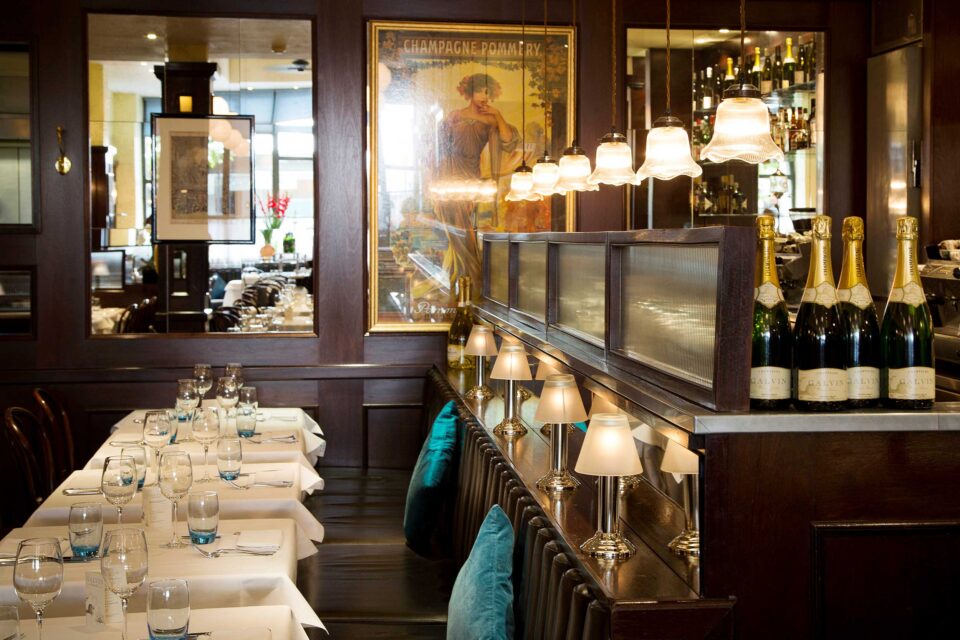
The process always begins by crystallising the concept to form a comprehensive brief. For example, when we launched our very first venture, Bistrot de Luxe, our budget was modest. We wished to offer accessible, classic French cookery within cosy, Parisian-inspired surroundings, utilising timeless Bentwood chairs and inviting leather banquettes.
The premises presented a challenging “L” shape, yet we used this to our advantage. Terence Conran once taught me that a room should always reveal itself slowly, ensuring it takes multiple visits to fully explore without ever losing its charm. The site had previously been designed by the brilliant Alan Yau for an Asian-Italian fusion concept. Aside from the impeccably built kitchen—which Jeff and I knew would become our second home—we essentially started anew. Steve introduced marvellous ideas involving warm wood panelling and strategically placed antique mirrors, transforming the space into an atmospheric, convivial dining hub.
We spent countless hours refining these ideas with the design team. Fortunately, my extensive collection of culinary literature helped convey the exact mood we desired. The agency then expanded upon this vision, creating a striking frontage on Baker Street that elegantly echoed the wide, bustling pavements of a quintessential Parisian boulevard.
Lighting is paramount in establishing the correct ambiance. For our early bistros, Steve sourced beautiful globe fixtures that became our visual signature. We realised that the most captivating dining scenes always feature a warm, welcoming amber glow. While modern establishments often utilise complex, computer-controlled systems to subtly shift the mood throughout the day, simplicity can be equally enchanting. As Oliver Peyton wisely noted when we launched our Mayfair venue: ‘Simply light the room with candles; there is nothing more attractive.
For our high-altitude establishment, United Design Partnership led the creative direction. Interestingly, their founder had previously collaborated with Terence Conran on iconic projects. The design was already quite advanced upon our arrival, but we immediately appreciated the understated glamour they had carved out of the space. Any iconic, elevated location will inevitably rely heavily on its panoramic views, but I believe the interior beautifully harmonises with both the skyline and our refined menus.
Returning to the creative process: after initial consultations, the arrival of the mood boards is a moment we always anticipate. Suddenly, the vision becomes tangible, and you can begin to vividly imagine the guest experience. Then comes the challenging reality of budgeting and tendering. We learned early on that less truly is more; investing in enduring quality is paramount. The last thing any bustling establishment needs is to pause service because inferior furnishings have failed.
Iconic Inspirations and Heritage Restorations
Another standout project from my career was my involvement with The Wolseley. Working alongside Chris Corbin and Jeremy King was exceptionally fortunate. They graciously invited me to share their vision, even travelling through Eastern Europe to observe historic café culture firsthand. Their attention to detail was staggering. Their guiding mantra was simply to build an establishment they themselves would want to frequent, insisting that every single element must bear meticulous scrutiny. They also taught me the invaluable lesson of making every guest feel an intimate sense of ownership over their favourite table.
I fondly recall visiting the late, great David Collins Studio in Chelsea to view his proposed concepts. Standing before those expansive boards, witnessing the breathtaking translation of pure imagination into tangible aesthetics, is a memory that continues to inspire my approach to hospitality.
Our Grade II listed sanctuary presented a wonderfully unique challenge. We had discovered a stunning, historic nineteenth-century building and envisioned a deluxe, relaxed dining environment—a place offering Michelin-starred finesse but with a brilliantly welcoming, unpretentious atmosphere. Given the incredible heritage architecture, our design team wisely suggested that success lay more in what we deliberately left out, rather than what we added.
Restoring this majestic hall was a true labour of love. As a protected heritage site, every concept required meticulous honing. Our brief demanded a timeless aesthetic: a luxurious blend of deep leather banquettes, comfortable seating, and antique mirrors that provided excellent sightlines across the expansive room. We focused entirely on natural materials—honed stone, cool marble, classic zinc, and premium woods—allowing the magnificent structure to speak for itself.
The striking lighting fixtures we ultimately selected were directly inspired by ecclesiastical designs. We felt the vaulted environment required something quietly reverent that wouldn’t dominate the space. Instead, the suspended fixtures create a gentle ‘halo’ effect, encouraging diners to look upward and fully appreciate the dramatic scale of the soaring wooden ceiling.
Our countryside venture presented an entirely different restoration challenge. A historic fourteenth-century establishment that had suffered severe fire damage, it stood derelict and boarded up. We promised the local community we would resurrect it, adding an elegant dining space built entirely sympathetically to its original heritage. Our design partners delivered a beautiful environment that seamlessly merges a traditional pub atmosphere with refined, rustic dining—a dedication to craftsmanship that has since been recognised with multiple national design accolades.
To conclude, once the primary architectural framework is complete, the true joy lies in the subtle styling. The curated artwork, plush fabrics, and carefully placed objets d’art form the distinct DNA that makes an establishment feel deeply personal. A great dining room never truly stops evolving; much like its seasonal menus and cellar selections, it remains a captivating piece of living art.
If asked to name my absolute favourite interior, it would be nearly impossible to narrow down. However, for sheer, unapologetic, and voluptuous Belle Époque grandeur, Le Train Bleu at the Gare de Lyon in Paris remains an eternal inspiration.